
This content is included in your SPKN Membership
Early Burnout and Short Careers
AUTHOR:
Meg Wilson
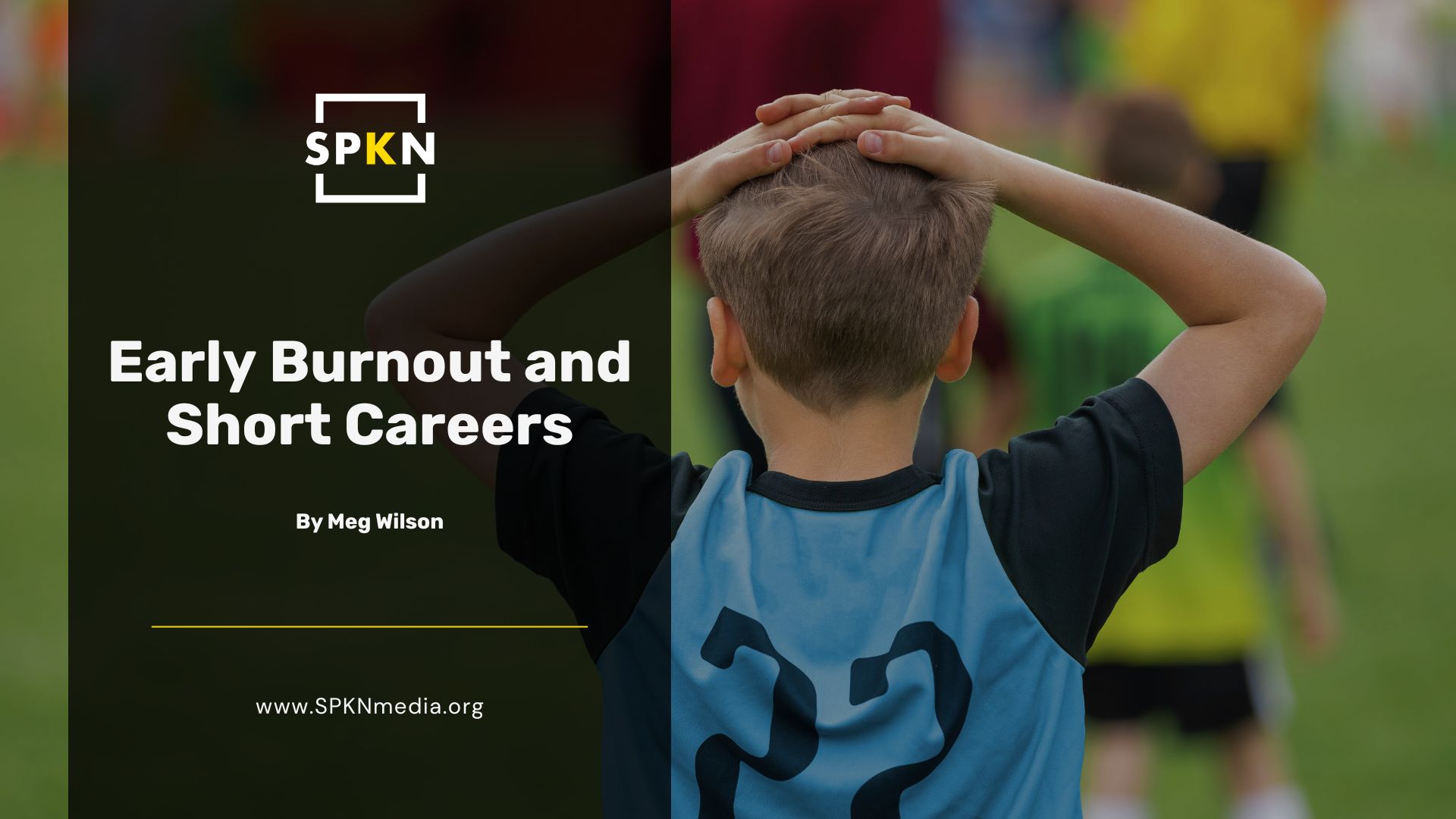
Parents want the best for their kids. Many are told that choosing one sport early and committing fully is the key to future success. But growing research shows the opposite: early sports specialization often does more harm than good — physically, mentally, and emotionally.
Physical Risks of Early Sports Specialization
Specializing in one sport too early places a heavy strain on a young athlete’s developing body. Research links early specialization to:
- Repetitive-use injuries caused by limited biomechanical variety
- Higher ACL and soft-tissue injury rates, especially in youth athletes
- Increased dropout rates due to chronic pain, exhaustion, and recurring injuries
Take soccer player Alex Freeman, for example. She tore both ACLs in high school during non-contact injuries. Her twin and older sister, also early specializers, faced similar setbacks.
“Many of my teammates had ACL tears before graduation,” Alex shared. “Some didn’t even know who they were without their sport.”
Early sports specialization doesn’t just shorten careers — it can end them before they begin.
The Psychological Toll on Young Athletes
Physical injuries are only part of the story. The mental and emotional impact of early specialization can be just as damaging.
A comprehensive review of 21 studies (Downing, Redelius, & Nordin-Bates, 2024) found:
- Early specializers reported lower motivation and less social support
- There is no consistent link between early specialization and improved mental toughness
- Many studies showed higher burnout rates and emotional exhaustion
When a child’s entire identity revolves around one sport, setbacks like injuries or reduced performance can lead to anxiety, depression, and even complete withdrawal from physical activity.
A Better Approach for Parents and Coaches
The solution isn’t to remove structure — it’s to delay intensive specialization until a child’s body, mind, and emotions are ready. Research suggests:
- Encourage multi-sport participation through middle and early high school
- Prioritize play and exploration in early years to develop creativity, motor skills, and overall enjoyment
- Watch for warning signs of burnout, overtraining, and loss of motivation
- Support autonomy by allowing kids to lead in choosing what, when, and how they play
And most importantly, remember this:
Not every great athlete needs to “go pro.” The ultimate goal is to help young people love sport for life — and become stronger, healthier humans because of it.
Changing the Conversation
For too long, the focus has been on how early kids should specialize. It’s time to ask a different question:
“How long can we help them love playing?”
By prioritizing lifelong development over early results, parents and coaches can give young athletes the tools they need to thrive — on the field, in the classroom, and beyond.
Resources
Charbonnet, B., & Conzelmann, A. (2023). Talent development in childhood: Early specialization or sampling? From an either–or question to a 2×2×3 question cuboid. International Journal of Sports Science & Coaching, 19(1), 459–475. https://doi.org/10.1177/17479541231197225Downing, C., Redelius, K., & Nordin-Bates, S. (2024). A systematic review of quantitative studies concerning psychological aspects of early specialisation. International Journal of Sport and Exercise Psychology, 22(8), 2018–2044. https://doi.org/10.1080/1612197X.2023.2251977Pandya, N. (2025). UCSF study on early sports specialization. UCSF Benioff Children’s Hospital Oakland.