
This content is included in your SPKN Membership
Building a Grateful Team Culture
AUTHOR:
Eli Waxler
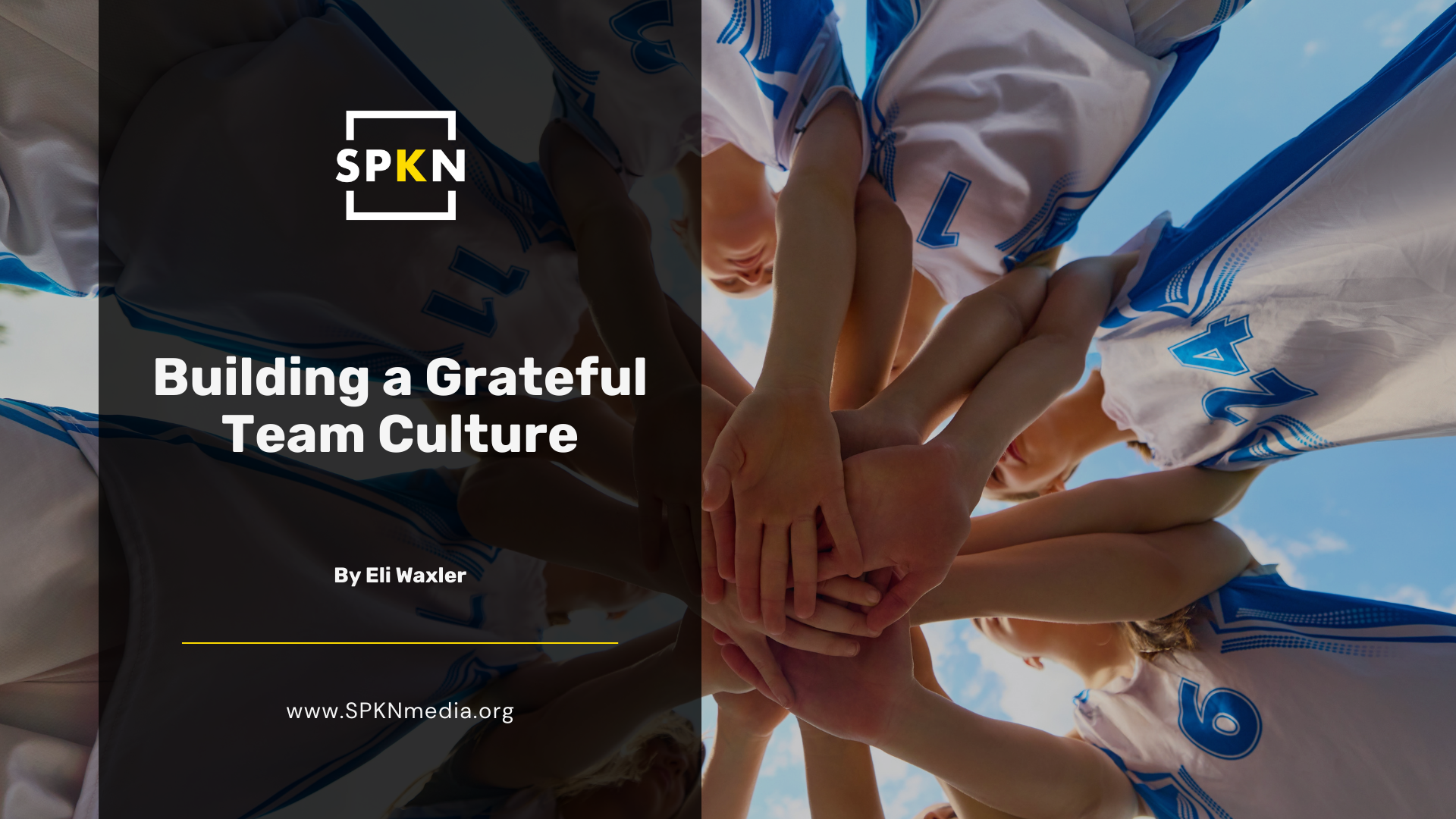
How Coaches Can Make Appreciation Reciprocal
In sport settings, gratitude is most powerful when it reflects a supportive culture, not just individual attitude.
Research with adolescent athletes has shown that:
- Gratitude is linked to stronger team cohesion, which in turn supports higher life satisfaction.
- A grateful team culture, where appreciation is a shared norm, predicts growth in athletes’ resilience over time.
- Athlete gratitude can help protect against burnout, in part by strengthening coach–athlete relationships and increasing hope.
Together, these findings point to a clear pattern: gratitude benefits athletes when it reflects authentic appreciation embedded in a supportive system.
Making Gratitude Reciprocal on Your Team
Coaches play a key role in making gratitude a two-way exchange rather than a one-direction expectation. Small, consistent habits are often more effective than formal programs.
Here are a few practical ways to rebalance gratitude so it circulates throughout the team:
1. Model upward and downward appreciation. Thank athletes publicly for effort, honesty, or leadership—not just for scoring or winning. Show them that their voice, vulnerability, and work between games matter.
2. Encourage peer recognition. End practices with a quick check-in:
- “Who helped you train well today?”
- “Who showed great effort or support?”
This normalizes athletes noticing and naming each other’s contributions.
3. Recognize the unseen contributors. Express gratitude toward support staff, athletic trainers, analysts, operations staff, and volunteers. When athletes see coaches valuing these roles, they learn that every contribution counts.
4. Create rotating gratitude rituals. Build simple rituals into the week where gratitude is shared and rotated. For example:
- One athlete thanks a teammate,
- One athlete thanks a staff member,
- One coach thanks an athlete.
Over time, everyone has a chance to both give and receive appreciation.
Turning Gratitude into a Shared Resource
Gratitude should not be a rule or a test of attitude. Used carelessly, it can pressure athletes to suppress frustration or accept inequity. Used intentionally, it can highlight connection and belonging. The most effective gratitude cultures are those that allow both appreciation and honesty. When coaches express thanks as readily as athletes do, and when gratitude includes the full web of relationships that make performance possible, it stops being a performance and becomes what it was meant to be all along: recognition of shared effort.
References
Algoe, S. B. (2012). Find, remind, and bind: The functions of gratitude in everyday relationships. Social and Personality Psychology Compass, 6(6), 455–469.
Anicich, E. M., Oishi, S., & Galinsky, A. D. (2021). Thanks, but no thanks: Unpacking the relationship between relative power and gratitude. Organizational Behavior and Human Decision Processes, 162, 13–26.
Chen, L.-H. (2024). A longitudinal and multilevel investigation of grateful culture in cultivating psychological resilience: The mediating role of athlete’s gratitude. Applied Research in Quality of Life, 19(3), 665–682.
Chen, L.-H., Kee, Y. H., Chen, M.-Y., & Chen, S. R. (2015). Why grateful adolescent athletes are more satisfied with their life: The mediating role of perceived team cohesion. Social Indicators Research, 124(2), 463–476.
Dong, L., Zou, S., Fan, R., Wang, B., & Ye, L. (2024). The influence of athletes’ gratitude on burnout: The sequential mediating roles of the coach–athlete relationship and hope. Frontiers in Psychology, 15, 1358799.
Grant, A. M., & Gino, F. (2010). A little thanks goes a long way: Explaining why gratitude expressions motivate prosocial behavior. Journal of Personality and Social Psychology, 98(6), 946–955.
Wood, A. M., Froh, J. J., & Geraghty, A. W. A. (2010). Gratitude and well-being: A review and theoretical integration. Clinical Psychology Review, 30(7), 890–905.