
This content is included in your SPKN Membership
The Hidden Curriculum Underlying Youth Sport Development
AUTHOR:
Eli Waxler
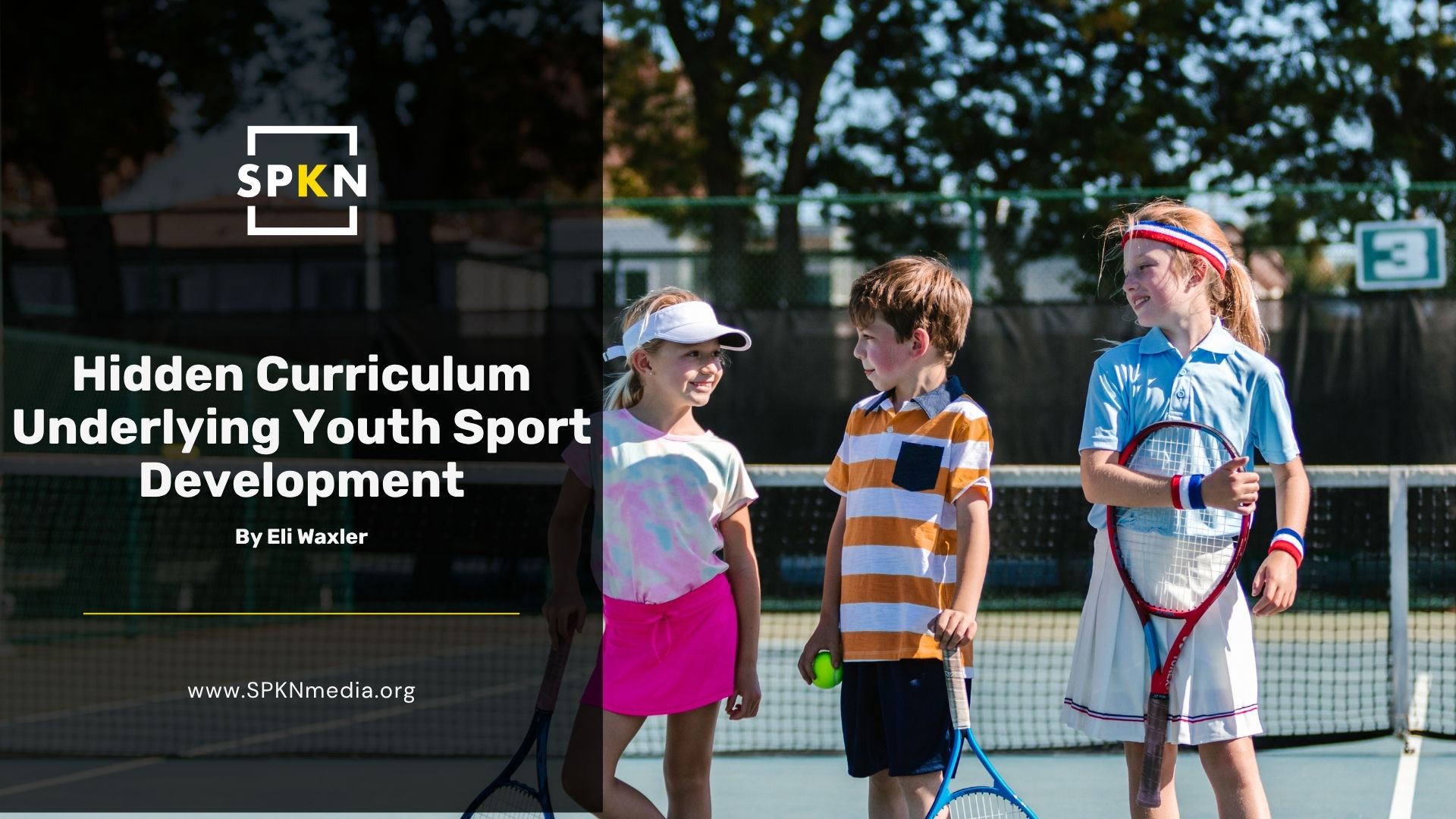
Youth sport is often framed as a setting for positive youth development. Participation is expected to foster qualities such as confidence, responsibility, teamwork, and resilience. These outcomes are frequently referenced in program mission statements and coaching philosophies. Yet the mechanisms through which sport might produce these developmental outcomes are rarely examined closely. One reason may be that many of the lessons young athletes learn in sport are not explicitly taught. Instead, they emerge through what educational researchers have long described as the hidden curriculum. The hidden curriculum refers to the implicit lessons embedded within an environment’s routines, expectations, and social norms (Jackson, 1968). In schools, students learn far more than academic content; they also learn how authority operates, how peers are treated, and what behaviors are rewarded or discouraged.
Sport environments function in much the same way. Coaches may intend to teach effort, discipline, or teamwork, but athletes often learn these lessons indirectly through the everyday structure of practices, competitions, and team interactions. Development therefore unfolds not only through formal instruction but through the patterns of experience that define the environment itself. Research on youth sport has repeatedly shown that developmental outcomes depend less on participation alone and more on the quality of the social environment surrounding sport experiences (Fraser-Thomas et al., 2005; Holt et al., 2017). Viewing youth sport through the lens of the hidden curriculum therefore helps explain why sport participation sometimes supports development and sometimes does not.
The Hidden Curriculum of Sport Environments
The hidden curriculum operates through repeated signals about what matters within a given environment. These signals are rarely stated directly. Instead, they are communicated through everyday practices such as how feedback is delivered, which behaviors receive attention, and how mistakes are interpreted. Young athletes are particularly attentive to these patterns, gradually forming implicit understandings about what success means, how effort is valued, and how individuals relate to one another within competitive settings.
Consider how athletes come to interpret mistakes. In some environments, errors are consistently framed as information that guides improvement. Coaches respond with feedback that encourages adjustment and continued effort, reinforcing the idea that learning involves experimentation and refinement. In other environments, mistakes are followed by criticism, reduced playing time, or visible frustration from adults. Even when these reactions are subtle, athletes quickly learn that errors threaten their standing within the group. Research on motivational climates suggests that environments emphasizing learning and mastery tend to support greater persistence and enjoyment than those focused primarily on comparison and evaluation (Ames, 1992; Ntoumanis & Biddle, 1999).
Similar processes shape how athletes understand success. When coaches consistently recognize effort, improvement, and collaboration, athletes may interpret success as something connected to development and contribution. When attention centers almost exclusively on performance outcomes, athletes may instead associate value with results and status within the team. These interpretations are rarely discussed explicitly, yet they influence how athletes approach challenges, evaluate progress, and understand their role within the group.
Positive Youth Development and the Five Cs
Developmental psychologists often describe healthy youth development using the framework of the Five Cs: competence, confidence, connection, character, and caring (Lerner et al., 2005). When these qualities develop in supportive environments, young people are more likely to thrive both socially and psychologically. Sport environments appear well positioned to support these developmental processes because they involve structured challenges, cooperative group activity, and repeated opportunities for feedback and growth. A growing body of sport psychology research has therefore explored how participation can contribute to positive youth development (e.g., Fraser-Thomas et al., 2005; Gould & Carson, 2008; Holt et al., 2017).
However, the Five Cs rarely emerge simply because a program states them as goals. Instead, they tend to develop through the hidden curriculum of the environment itself. Competence grows when athletes experience clear pathways for improvement and receive feedback that emphasizes learning rather than evaluation. Confidence develops when athletes interpret challenges as manageable and when their sense of ability becomes tied to effort and adaptation rather than momentary results. Connection strengthens when team cultures encourage mutual support and shared responsibility rather than rigid hierarchies.
Character and caring also emerge through the relational norms athletes observe around them. How coaches treat officials, how teammates respond to each other’s struggles, and how success or failure is handled all communicate expectations about responsibility, empathy, and respect. Research examining life-skill development in sport suggests that these social processes are central to how developmental outcomes emerge (Gould & Carson, 2008). In this way, the Five Cs can be understood as outcomes that arise from the hidden curriculum embedded within sport environments.
Development Through Repeated Experience
The hidden curriculum perspective suggests that youth sport functions as a developmental system because it exposes young people to repeated cycles of challenge, feedback, and social interaction. Practices, competitions, and team dynamics create continuous opportunities for athletes to interpret their experiences and adjust their behavior. Through these cycles, athletes gradually construct beliefs about effort, improvement, belonging, and responsibility. When environments consistently reinforce learning and cooperation, these beliefs tend to support both athletic development and broader psychological growth. Longitudinal research on youth program participation suggests that supportive climates and positive peer relationships are influential in shaping these outcomes (Holt et al., 2017; Lerner et al., 2005). When environments emphasize comparison, rigid status structures, or fear of mistakes, athletes may internalize very different lessons. Importantly, these outcomes often emerge regardless of the intentions of coaches or program leaders because the hidden curriculum operates through everyday patterns that accumulate over time.
Designing Development Through Environment
Recognizing the hidden curriculum of youth sport shifts attention toward the structure of the environment itself. Rather than asking how coaches can explicitly teach life skills, it may be more useful to consider what lessons are embedded in the daily experience of athletes. Small features of sport environments, how mistakes are framed, how effort is recognized, how teammates interact, and how roles are communicated, shape the signals athletes interpret about success, belonging, and improvement. Several principles may help align these signals with developmental goals.
- Treating mistakes as information encourages athletes to interpret challenges as opportunities for learning rather than threats to status.
- Consistently recognizing effort and improvement reinforces the idea that ability evolves through persistence and adaptation.
- Encouraging athletes to support one another strengthens connection while maintaining competitive standards.
- Finally, avoiding overly rigid role identities allows athletes to maintain continuity as responsibilities shift over time.
These adjustments do not require formal character education programs. Instead, they involve subtle shifts in everyday interactions that shape the environment’s underlying messages.
Development Happens in the Background
Youth sport does not automatically produce positive development, but it does create conditions where development is possible. The lessons athletes take away often arise from the hidden curriculum embedded within the environment rather than from explicit attempts to teach character or life skills. When sport environments consistently reinforce learning, cooperation, and adaptability, the experiences athletes accumulate can support the development of competence, confidence, connection, character, and caring. Understanding youth sport through this lens invites a broader perspective on coaching. Development is not only about the skills that are intentionally taught but also about the lessons athletes absorb quietly as they navigate the rhythms of training, competition, and team life.
References
Ames, C. (1992). Achievement goals and the classroom motivational climate. In D. H. Schunk & J. L. Meece (Eds.), Student perceptions in the classroom (pp. 327–348). Lawrence Erlbaum Associates, Inc.
Fraser-Thomas, J. L., Côté, J., & Deakin, J. (2005). Youth sport programs: an avenue to foster positive youth development. Physical Education and Sport Pedagogy, 10(1), 19–40. https://doi.org/10.1080/1740898042000334890
Gould, D., & Carson, S. (2008). Life skills development through sport: current status and future directions. International Review of Sport and Exercise Psychology, 1(1), 58–78. https://doi.org/10.1080/17509840701834573.
Holt, N. L., Neely, K. C., Slater, L. G., Camiré, M., Côté, J., Fraser-Thomas, J., MacDonald, D., Strachan, L., & Tamminen, K. A. (2017). A grounded theory of positive youth development through sport based on results from a qualitative meta-study. International Review of Sport and Exercise Psychology, 10(1), 1–49. https://doi.org/10.1080/1750984X.2016.1180704
Jackson, P. W. (1968). Life in classrooms. New York: Holt, Rinehart, & Winston.
Lerner, R. M., Lerner, J. V., Almerigi, J. B., Theokas, C., Phelps, E., Gestsdottir, S., Naudeau, S., Jelicic, H., Alberts, A., Ma, L., Smith, L. M., Bobek, D. L., Richman-Raphael, D., Simpson, I., Christiansen, E. D., & von Eye, A. (2005). Positive Youth Development, Participation in Community Youth Development Programs, and Community Contributions of Fifth-Grade Adolescents: Findings From the First Wave Of the 4-H Study of Positive Youth Development. The Journal of Early Adolescence, 25(1), 17–71. https://doi.org/10.1177/0272431604272461
Ntoumanis, N., & Biddle, S. J. (1999). A review of motivational climate in physical activity. Journal of sports sciences, 17(8), 643–665. https://doi.org/10.1080/026404199365678