
This content is included in your SPKN Membership
Impact of Positive Parent-Coach Partnership in Foundational Youth Sport (Grades K-12)
AUTHOR:
Dr. Brandy Runyan
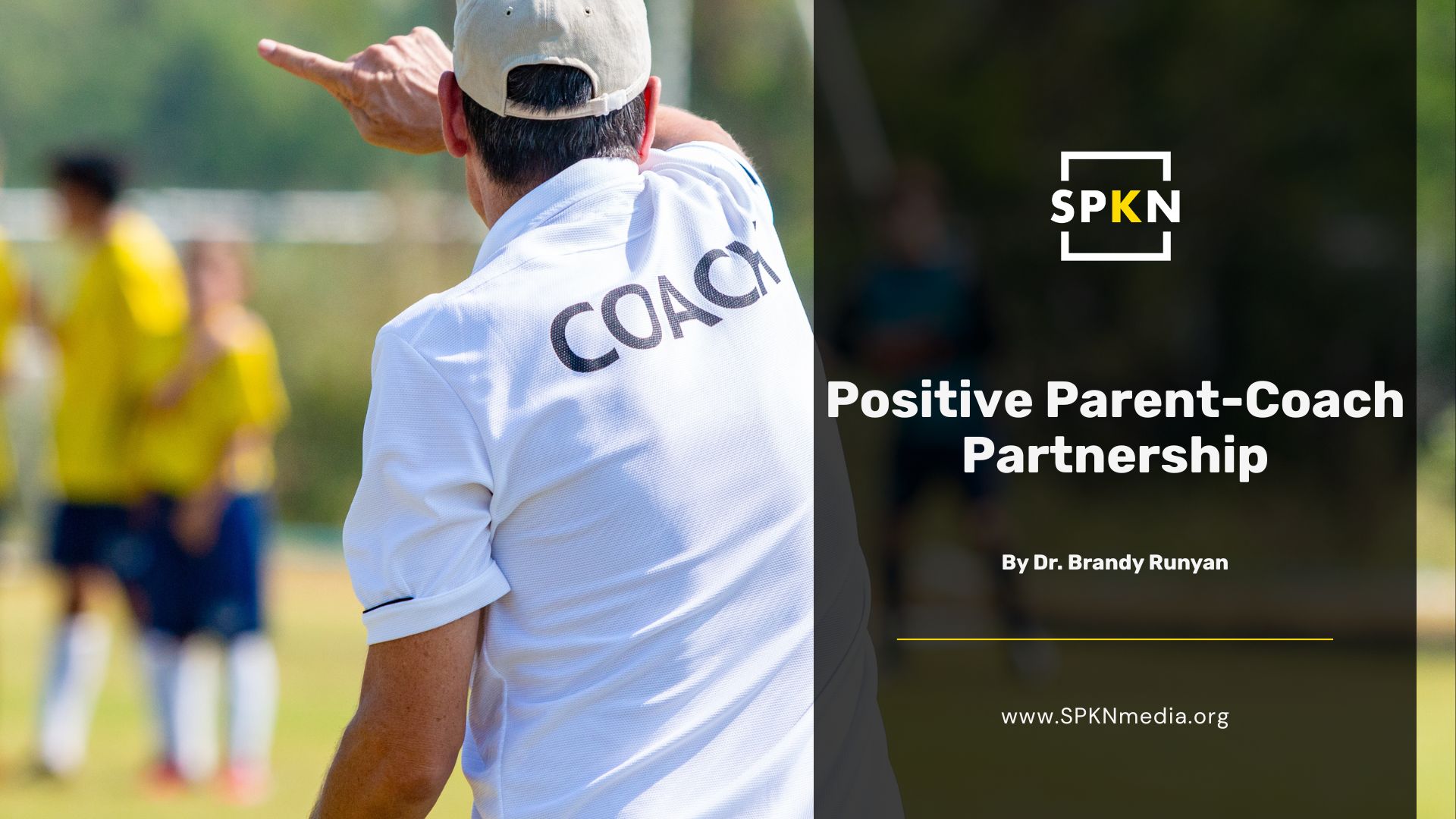
Participation in organized sport often begins during the early elementary school years, making foundational youth sport programs a pivotal stepping stone for shaping children’s perceptions of athletics, competition, and teamwork (Weiss et al., 2016). During this stage of development, young athletes are not only learning basic motor skills and new sport concepts but are also forming attitudes about effort, success, failure, and relationships with authority figures (Baskaya et al., 2023). Two adults play significant influential roles in this process: parents and coaches. Parents provide emotional support, logistics, and financial support that enable participation in sport, while coaches introduce athletes to structured learning, teamwork, and basic skill development (Kramers et al., 2022). The relationship between these two groups critically influences the tone of the sport environment and the experiences of young athletes (Horne et al., 2020).
In foundational youth sports settings, parents often serve as the child’s primary source of motivation and understanding of the sport experience (Sutcliffe et al., 2021). Children frequently look to their parents during practices, games, and after games to determine whether they did well and how they should feel about their performance (Knoester & Bjork, 2025). Positive parental reinforcement can give child athletes confidence, leading to more enjoyment of their sport experiences, as well as help them learn the beginnings of persistence and mental resilience in sport (Gao et al., 2024). However, if parental attitudes toward coaches and the sport environment are negative, tension can develop and negatively impact the child’s perception of sport. When parents demonstrate respect toward coaches and reinforce the developmental goals of the program, young athletes are much more likely to view coaches as trusted mentors and authority figures (O’Donnell et al., 2022).
Coaches in youth sport programs serving grades K through 5 are responsible for introducing athletes to the fundamental principles of sport participation (Rodriguez et al., 2023).
At this early stage, coaching priorities typically include teaching the basic rules of the sport, teaching basic skills, encouraging teamwork, and fostering a positive experience for the participants (Rodriguez et al, 2023). Because young athletes are still developing emotionally, cognitively, and physically, coaches must emphasize learning and enjoyment of the sport over competitive outcomes (Jorgensen et al., 2024). The lessons coaches teach about teamwork, effort, and self-improvement are most effective when they are supported and reinforced by parents outside of practices and games (McCleery et al., 2023).
The alignment of expectations between parents and coaches is critical during these early stages of sport participation. Without clear communication, misunderstandings may arise regarding playing time, skill development, and the purpose of youth sport programs (Kramers et al., 2022). While some parents may view youth sport as an early pathway toward competitive advancement, many foundational programs are designed primarily to foster skill development, enjoyment, and participation (Gao et al., 2024). When parents and coaches share a common understanding of these goals, young athletes receive consistent messages that support healthy development and positive sport experiences (McCleery et al., 2023).
Youth sport organizations play an important role in providing a positive parent-coach partnership in several key areas. Organizations should start by establishing clear communication practices and expectations at the beginning of each playing season. Preseason parent meetings create an environment where coaching staffs can outline player expectations, parental requirements and responsibilities, as well as player and parent codes of conduct (Sutcliffe & Tamminen, 2025). During these meetings, coaches may also develop clear communication practices and emphasize the developmental goals of youth sport, which can help align perspectives between families and coaching staff (Sutcliffe & Tamminen, 2025). Encouraging respectful sideline behavior, open communication, and mutual support for young athletes can further strengthen these relationships (Ntalachani et al., 2025).
Developing strong partnerships between these two stakeholders during the foundational years of youth sport can have lasting benefits for athletes, families, and sport organizations (Sutcliffe & Tamminen, 2025). Positive early experiences help create environments where children feel supported, valued, and motivated to continue participating in sport (Gao et al., 2024). Intentionally fostering collaboration between parents and coaches in grades K through 5, gives youth sport programs an opportunity to establish a healthy culture that promotes enjoyment, development, and long-term participation in athletics (Jorgensen et al., 2024).
References
Başkaya, G., Bostancı, S., Çar, B., & Konar, N. (2023). The impact of athletics basic education on students’ motor skills and attitude toward athletics. Physical Education of Students, 27(4), 177–189. https://doi.org/10.15561/20755279.2023.0405
Gao, Z., Wazir , M. R., Wazir, N., Wang, J., Zheng, X., Wang, T., & Chee, C. S. (2024). The role of parents in the motivation of young athletes: A systematic review. Frontiers in Psychology, 14.
Horne, E., Woolf, J., & Green, C. (2020). Relationship dynamics between parents and coaches: Are they failing young athletes? Managing Sport and Leisure, 27(3), 1–17. https://doi.org/10.1080/23750472.2020.1779114
Jørgensen, T. M., Gjesdal, S., & Abrahamsen, F. E. (2024). Understanding enjoyment within the context of the children-to-youth sport transition in Norwegian soccer: A mixed methods study. Psychology of Sport and Exercise, 75, 102723.
https://doi.org/10.1016/j.psychsport.2024.102723
Knoester, C., & Bjork, C. (2025). Parental involvement in youth sports: Historical trends and links to generational, socioeconomic status, sport culture, and youth sport commitment contexts. Leisure/Loisir, 1–37. https://doi.org/10.1080/14927713.2025.2503183
Kramers, S., Thrower, S. N., Steptoe, K., & Harwood, C. G. (2022). Parental strategies for supporting children’s psychosocial development within and beyond elite sport. Journal of Applied Sport Psychology, 35(3), 1–23. https://doi.org/10.1080/10413200.2022.2043486
McCleery, J., & Burton, M. S. (1202). How parents and coaches can support positive development. In M. A. Christino, E. I. Pluhar, & L. J. Micheli (Eds.), Psychological Considerations in the Young Athlete. Springer.
Author: Dr. Brandy Runyan (PhD-Sports Leadership)
Ntalachani, K., Dania, A., Karteroliotis, K., & Stavrou, N. (2025). Parental involvement in youth sports: A phenomenological analysis of the coach–athlete–parent relationship. Youth, 5(3), 81. https://doi.org/10.3390/youth5030081
O’Donnell, K., Elliott, S. K., & Drummond, M. J. (2022). Exploring parent and coach relationships in youth sport: A qualitative study. Qualitative Research in Sport, Exercise and Health, 14(7), 1–22. https://doi.org/10.1080/2159676x.2022.2048060
Rodriguez, F. I. E., Falcão, W. R., & McCarthy, J. (2023). Coach as youth development specialist: Developing a tpsr-based coach training program and examining participants’ experiences. Physical Education and Sport Pedagogy, 43–66.
https://doi.org/10.1080/17408989.2023.2281910
Sutcliffe, J. T., Fernandez, D. K., Kelly, P. J., & Vella, S. A. (2021). The parental experience in youth sport: a systematic review and qualitative meta-study. International Review of Sport and Exercise Psychology, 17(1), 236–263.
https://doi.org/10.1080/1750984X.2021.1998576
Sutcliffe, J., & Tamminen, K. (2025). Exploring the development of coach-parent relationships in organized competitive youth team sports. PLOS One.
https://doi.org/10.1371/journal.pone.0333559 Weiss, O., Norden, G., Nader, M., & Arnusch, F. (2016). European Sport Index: The social significance of sport in 28 European countries. European Journal for Sport and Society, 13(2), 167–182. https://doi.org/10.1080/16138171.2016.1183933